BeamWeatherGet the app

Watch a storm evolve.

One scan shows a storm's shape. A run of scans shows it change.

The core falls.

When the updraft weakens, the heavy core it was holding up comes down. Across a few scans, you see the downburst coming.
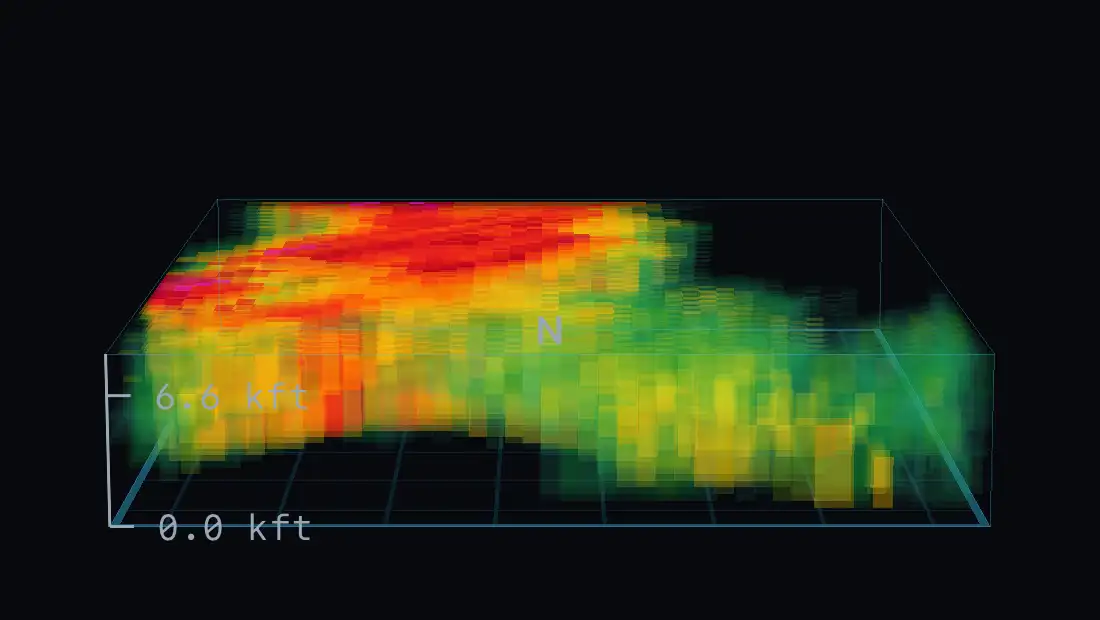
One storm cell in three dimensions, seen side-on across ten scans: a red core near the top of the column thins out and the whole column fades to green.
2025-07-15 19:33Z
KAMX, one cell, July 15, 2025. 10 scans over 45 minutes.Radar data: NOAA/NWS NEXRAD — rendering by BeamWeather

The column unloads.

The same cell, 36 minutes apart. The column thins from the top down as the storm drops its water.
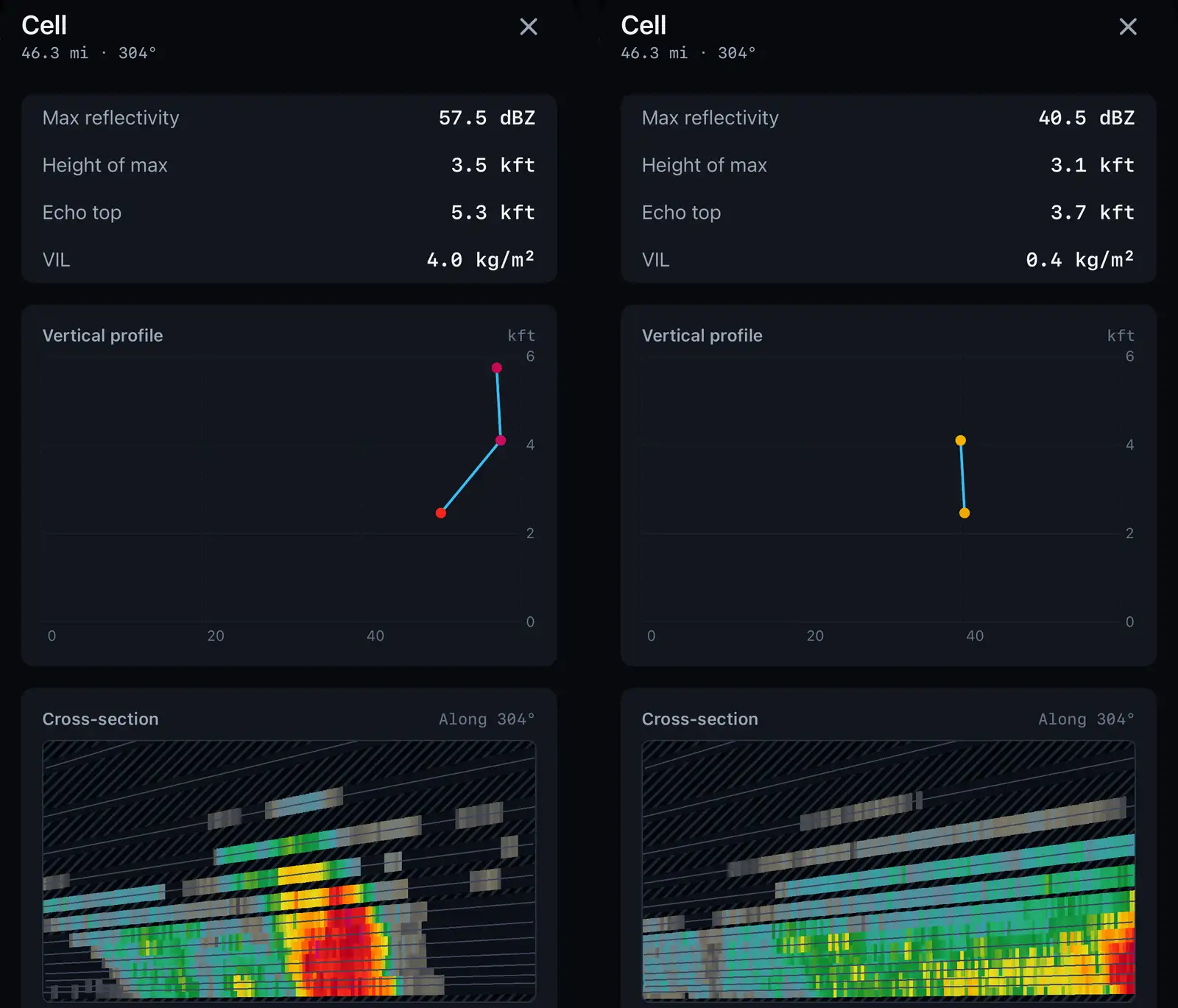
The same storm cell's details 36 minutes apart. In the first, peak 57.5 dBZ and VIL 4.0 kg/m², with a strong core in the slice. In the second, peak 40.5 dBZ and VIL 0.4 kg/m², the core gone.
KAMX, the same cell 36 minutes apart.Radar data: NOAA/NWS NEXRAD — rendering by BeamWeather

Every 4 to 6 minutes.

That's how often the radar completes a scan. Each frame is one scan, labeled with its time.

Past storms, too.

Pick a station and a date, and watch it build again.

The archive

Get BeamWeather.

Download on the App StoreGet it on Google Play

iPhone, iPad and Android.